
Trello and Asana are among the most popular productivity tools for solopreneurs on the market currently.
Both offer free plans and can help solo business owners organize their workflow better.
But they approach productivity very differently.
Trello focuses on simplicity and visual task management. Asana leans more toward structure, planning, and workflow depth.
So which one actually works better for a one-person business?
After researching user experiences, Reddit discussions, reviews, pricing structures, and real-world use cases, here’s the full breakdown.
Trello vs Asana: Quick Verdict
If you want the short answer:
Trello is better for solo entrepreneurs who want a simple, visual, low-maintenance productivity system.
Asana is better for solo business owners handling multiple tasks, complex projects, recurring workflows, deadlines, and client operations.
| Feature | Trello | Asana |
| Best For | Simple solo workflows | Structured business operations |
| Learning Curve | Very easy | Moderate |
| Interface Style | Visual Kanban boards | Lists, boards, timelines, calendars |
| Setup Time | Fast | Slower |
| Ease of Daily Use | Excellent for quick task management | Better for detailed planning |
| Project Complexity Handling | Moderate | Strong |
| Recurring Workflows | Basic without automation | Much better built-in support |
| Content Planning | Excellent | Excellent |
| Client Management | Good for simple setups | Better for layered workflows |
| Workflow Customization | Limited compared to Asana | Highly customizable |
| Automation | Basic on free tier | More advanced |
| Calendar View | Paid plans | Better integrated |
| Timeline/Gantt Style Planning | Limited | Strong |
| Task Dependencies | Weak | Excellent |
| Subtasks | Basic | Advanced |
| Overhead | Low | Higher |
| Mobile Experience | Clean and lightweight | Feature-rich but heavier |
| Collaboration Features | Good | Excellent |
| Free Plan Value | Very strong for solo users | Strong but more team-focused |
| Pricing | Cheaper overall | More expensive |
| Best Choice for Beginners | Trello | Asana |
| Best Choice for Scaling Operations | Asana | Asana |
| Biggest Strength | Simplicity | Structure |
| Biggest Weakness | Can become messy at scale | Can feel overwhelming |
| Recommended For | Bloggers, freelancers, creators, affiliate marketers | Agencies, operators, multi-client businesses |
For most beginners and small one-person businesses, Trello is usually the easier starting point.
But once your workflow becomes more layered, Asana starts making more sense.
That’s the real trade-off.
Simplicity vs structure.
Trello vs Asana: Core Difference
The biggest difference between the two tools is how they organize work.
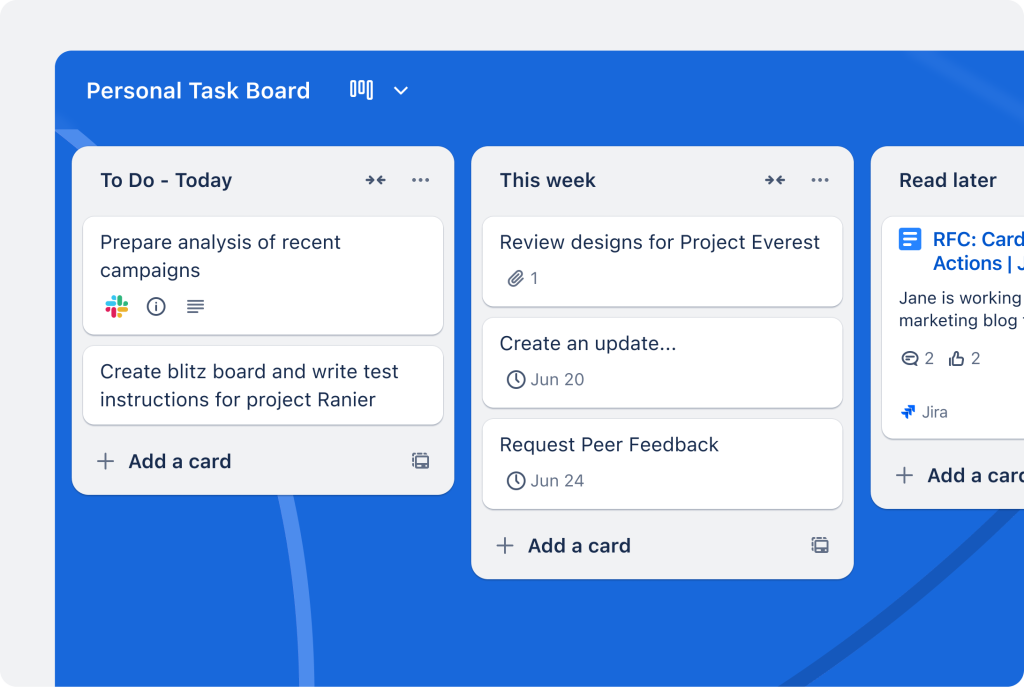
Trello is built around Kanban boards.
You create columns like:
- To Do
- In Progress
- Completed
Then you move cards across the board.
That’s basically Trello’s entire philosophy. Simple and visual.
Asana takes a broader approach.
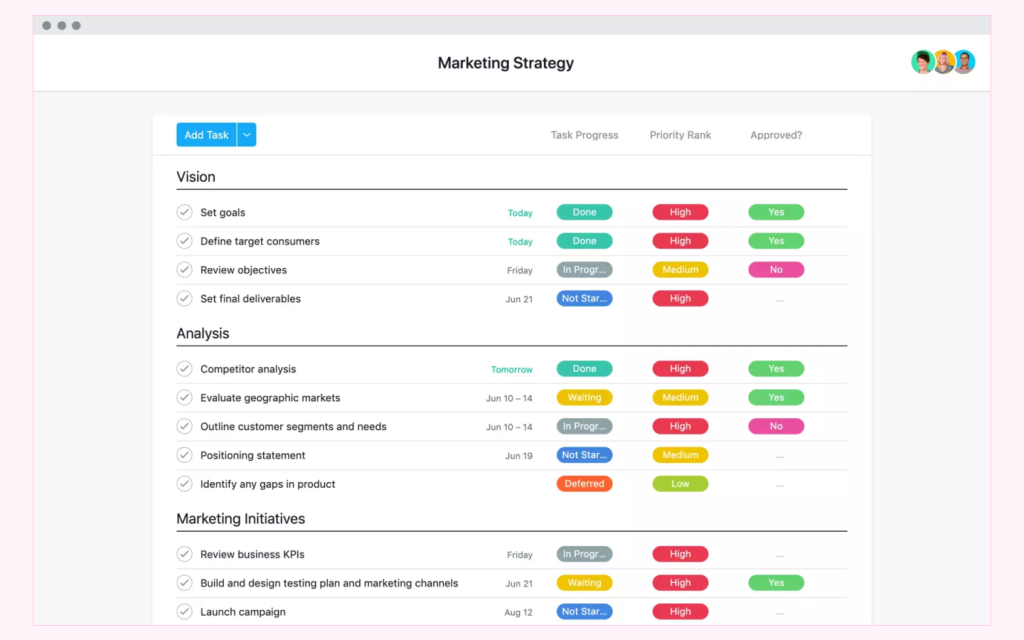
Instead of relying mainly on boards, Asana allows you to manage tasks using:
- Lists
- Timelines
- Calendars
- Boards
- Dependencies
- Subtasks
- Workflows
It feels more like a complete operations system rather than a lightweight task board.
For a solo business owner, that difference matters a lot.
Why Many Solo Entrepreneurs Prefer Trello
There’s a reason Trello became extremely popular among freelancers, creators, bloggers, and small online businesses.
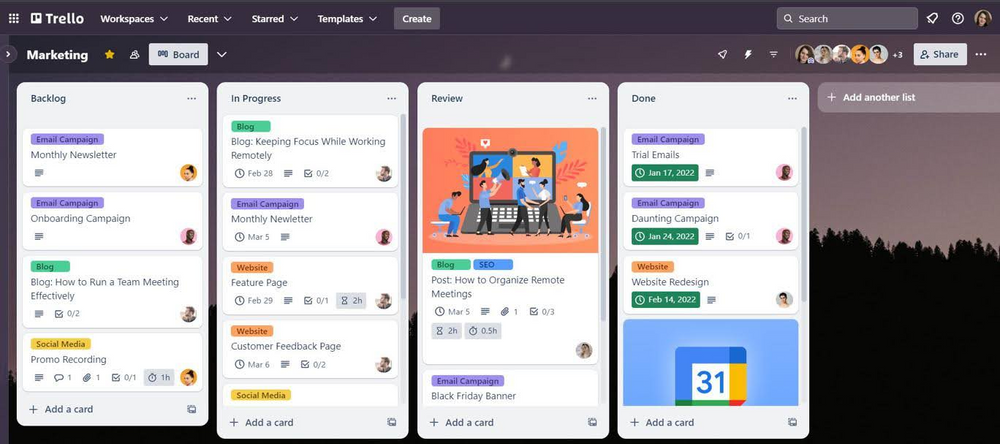
It’s incredibly easy to use.
You can create your first board in minutes without watching tutorials or learning project management terminology.
That low learning curve is Trello’s biggest strength.
You open the app and instantly understand what’s happening.
For one-person businesses, that matters more than people think.
You don’t want to spend three days setting up productivity systems instead of actually working.
Trello Feels Less Overwhelming
One common complaint about advanced productivity tools is that they become another thing to manage.
Trello avoids that problem better than most.
The interface stays clean even after adding multiple projects.
That makes it excellent for:
- SEO content planning
- Blog pipelines
- Client management
- Social media scheduling
- Affiliate marketing workflows
- Personal task tracking
A lot of solo founders also prefer Trello because it mirrors how people naturally think visually.
You drag tasks around instead of constantly opening menus and dashboards.
That creates less friction during daily use.
Trello Is Better for Fast Task Management
If your workflow mainly revolves around:
- Content creation
- Daily tasks
- Lightweight projects
- Simple workflows
Trello usually feels faster.
You spend less time organizing and more time executing.
That’s a major advantage for one-person businesses where speed matters more than enterprise-level planning.
Trello’s Free Plan Is Enough for Most Solo Users
Trello’s free plan is still usable for solo entrepreneurs despite some limitations. It includes unlimited cards, automation support, and up to 10 boards per workspace.
For many one-person businesses, that’s enough.
You can easily create boards for:
- Content calendar
- Client projects
- Business operations
- Idea dumping
- Personal goals
- Finance tracking
Without paying anything.
That makes Trello one of the cheapest productivity systems to maintain long-term.
Where Trello Starts Falling Short
Trello becomes less effective once your business operations become more layered.
This usually happens when:
- You manage many clients
- You run multiple content systems
- You depend heavily on recurring workflows
- You need detailed planning
- You track deadlines aggressively
At that point, Trello starts relying heavily on workarounds.
You’ll notice many advanced users building complicated board structures just to imitate features already built into Asana.
That’s the limitation of a Kanban-first system.
Large Workflows Become Cluttered
Trello works best when projects stay visually manageable.
But once cards start multiplying, boards can become chaotic.
You’ll spend more time navigating boards.
Some Reddit users specifically mentioned that Trello feels great initially but “hits a wall” once workflows become more complex.
That’s a common pattern.
Why Some Solo Business Owners Prefer Asana
Asana takes the opposite approach.
Instead of keeping things lightweight, it focuses on structure.
You get:
- Detailed task management
- Project timelines
- Subtasks
- Dependencies
- Workflow automation
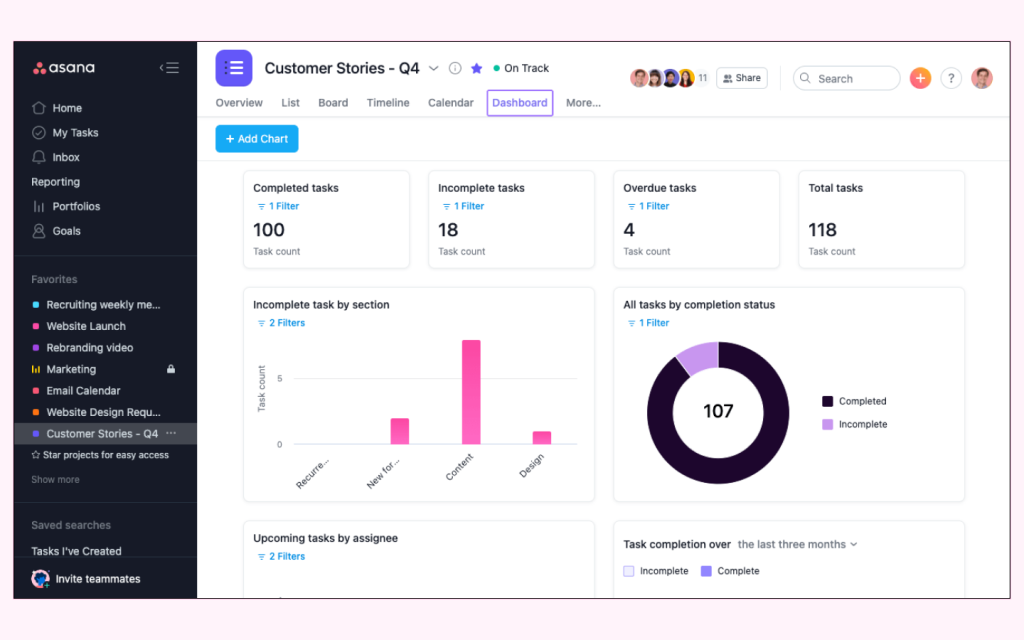
- Multiple project views
At first, it feels heavier than Trello.
But for some solo businesses, that extra structure becomes extremely valuable.
Asana Is Better for Operational Businesses
If your one-person business involves many moving parts, Asana starts pulling ahead quickly.
Instead of using separate boards for everything, you can organize work inside layered project systems.
That becomes useful once your business grows beyond simple task tracking.
Recurring Systems Work Better in Asana
One underrated advantage of Asana is recurring workflow management.
Solo business owners often repeat the same processes. Asana handles recurring systems more smoothly because tasks, dependencies, and timelines are built deeper into the platform.
Trello can still do this through automation, but it often feels patched together.
Asana Gives Better Long-Term Visibility
Asana is better if you plan business operations weeks or months ahead.
Its timeline and calendar views help you understand workload distribution much better than Trello boards.
This matters for content-heavy businesses especially.
If you’re publishing SEO content regularly, managing campaigns, or tracking multiple projects simultaneously, Asana offers stronger planning visibility.
The Biggest Problem With Asana
The biggest issue with Asana for solo users is complexity.
Not technical complexity. We’re talking mental complexity.
You can easily overbuild your system.A lot of solo entrepreneurs end up spending too much time organizing workflows instead of executing tasks.
That’s the hidden danger of advanced productivity tools.
For simple businesses, Asana can feel unnecessarily heavy.
According to some solo freelancers, Asana feels more team-focused than solo-focused despite having a strong free plan.
And honestly, that criticism is fair.
Trello vs Asana for Different One-Person Businesses
Choose Trello If You:
- Run a small SEO blog
- Manage content pipelines
- Prefer visual workflows
- Want something fast and lightweight
- Hate complicated productivity systems
- Mostly manage yourself instead of teams
Trello is especially good for creators and freelancers who want low-friction task management.
Choose Asana If You:
- Handle many client projects
- Operate multiple workflows simultaneously
- Need recurring systems
- Depend heavily on deadlines
- Want structured planning
- Expect your operations to grow
Asana makes more sense for operational-heavy businesses.
Trello vs Asana Pricing for Solo Users
For solo entrepreneurs, pricing matters.
Trello’s paid plans are generally cheaper and easier to justify for one-person businesses. Trello Standard starts around $5 per month annually.
Asana’s pricing climbs faster once you need premium features.
That’s important because many solo users never fully utilize advanced enterprise-level features anyway.
If budget matters heavily, Trello usually offers better value.
My Recommendation for Most Solo Entrepreneurs
For most one-person businesses, Trello is the better starting point.
Not because it’s objectively superior. But because simplicity scales better than people expect.
Most solo founders don’t fail because they lacked advanced workflow dashboards.
They fail because their systems become bloated and hard to maintain.
Trello avoids that better than Asana.
So it’s the best project management tools for beginner solopreneurs to get started with.
However, once your business grows operationally, Asana becomes harder to ignore.At that stage, structure becomes more important than simplicity.
Final Thoughts
Trello and Asana are both excellent productivity tools.
But they solve different problems.
For a one-person business, the right choice depends less on features and more on how your brain prefers to organize work.
If you want something visual, lightweight, and easy to maintain, Trello is difficult to beat.
If you want a more structured business operating system with deeper planning capabilities, Asana is the stronger tool.
Most solo entrepreneurs will probably outgrow one tool eventually anyway.
The important thing is building a system you’ll actually stick to daily.
Liked our comparison guide? Check out our take on Notion and Obsidian comparison!
FAQs
Is Trello better than Asana for freelancers?
Usually, yes. Trello is simpler, faster to learn, and easier to maintain for freelancers managing lightweight workflows.
Can I run a business entirely on Trello?
Yes. Many solo entrepreneurs use Trello for content management, client tracking, publishing schedules, and task management successfully.
Is Asana too complicated for one-person businesses?
Not always. But for simple businesses, Asana can feel heavier than necessary due to its structured workflow system.
Which is cheaper for solo entrepreneurs: Trello or Asana?
Trello is generally cheaper and offers better value for simple one-person businesses. Its free plan is also strong enough for many solo users.