
When you’re running a business alone, your email list is the one thing you actually own.
Social media algorithms can shift. Platforms might disappear within the turn of decade. But your subscriber list stays with you. And the right email marketing tool is what makes that list work for you without eating up your whole day.
The problem? Most platforms are built for teams. They assume you have a marketing manager, a developer, and three hours a week to configure workflows. You don’t. You’ve got a business to run.
I tested and researched the most talked-about email tools specifically for solopreneurs — comparing ease of setup, automation, pricing as your list grows, and whether you can realistically run the thing alone. Here’s what actually holds up.
Quick Comparison: Best Email Marketing Tools for Solopreneurs
| Tool | Free Plan | Paid Starts At | Best For | Automation on Free? |
| MailerLite | 500 subs, 12K emails/mo | $10/mo | All-around simplicity | Yes |
| Kit (ConvertKit) | Up to 10K subs (Newsletter plan) | $33/mo | Creators & monetization | Limited |
| Brevo | Unlimited contacts, 300 emails/day | $9/mo | Budget-conscious solopreneurs | Yes |
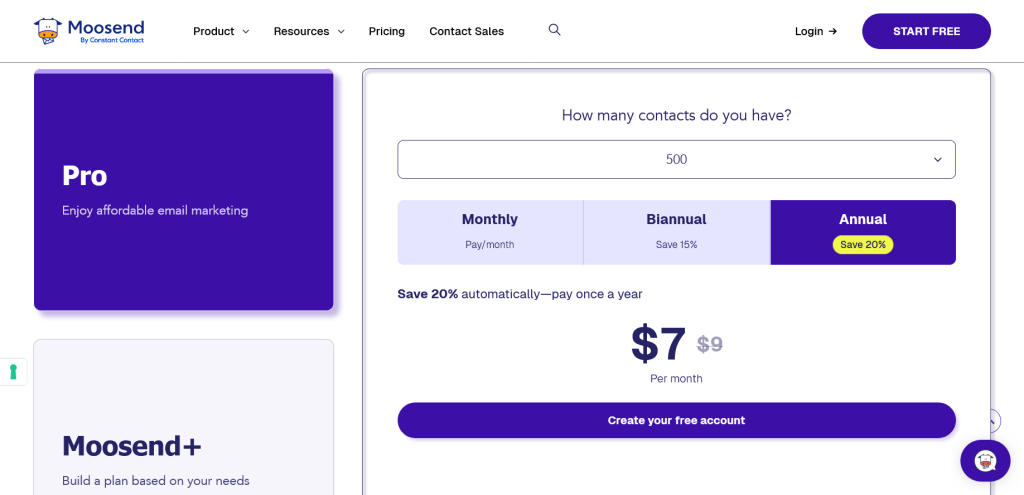
| Moosend | 30-day trial | $9/mo | Segmentation & personalization | Yes |
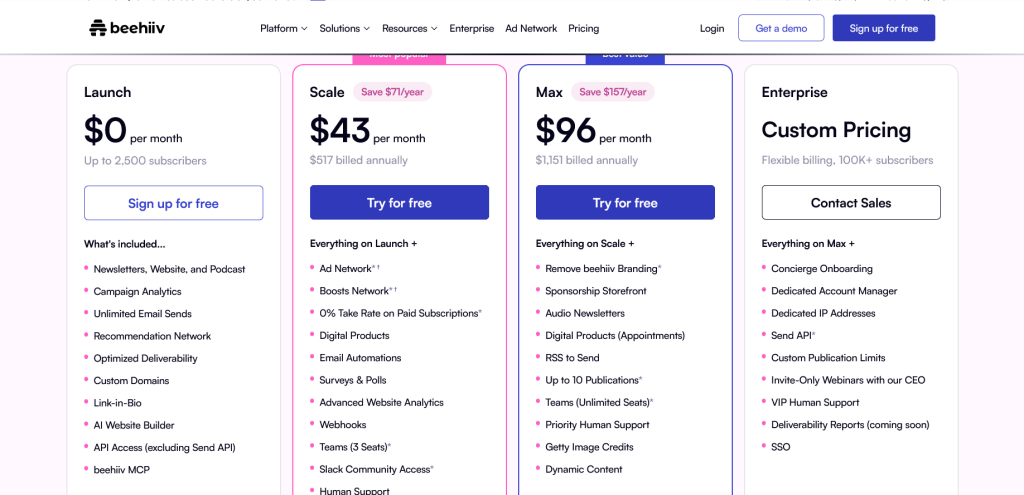
| beehiiv | Up to 2,500 subs | $39/mo | Newsletter monetization | No |
What Solopreneurs Actually Need From an Email Tool
Before picking a platform, get clear on what you’re actually optimizing for.
Running a one-person business means your email tool has to do a specific job: save you time, land in inboxes reliably, and not send your costs through the roof as your list grows.
Here’s what matters most:
Low barrier to start. You should be sending your first email within an hour of signing up — not after an onboarding call.
Automation that runs without you. Welcome sequences, nurture flows, abandoned cart triggers. Set it once, let it go.
Pricing that scales without surprises. Some platforms get expensive fast once you hit certain subscriber thresholds. Know what you’re getting into before you’re locked in.
Deliverability you can count on. An email that goes to spam is worse than not sending it at all. You are here to build client relationship as a solopreneur. If your client can’t read your email, that’s not happening.
No team required. Everything from forms, landing pages, sequences should be manageable by one person who isn’t a developer.
Keep those in mind as you read through the options below.
The Best Email Marketing Tools for Solopreneurs
1. MailerLite — Best Overall for Solopreneurs
If I had to pick one tool and call it done, MailerLite is it for most solopreneurs.
The free plan gives you 500 subscribers and 12,000 emails per month. What makes it stand out from other free tiers is that automations are included.
Most competitors lock that behind a paywall. With MailerLite, you can build a welcome sequence, set up triggers, and segment your list. All at zero cost.
The drag-and-drop editor is clean. Landing pages, forms, popups, and one website builder are all included. You’re not piecing together five tools; it’s one place.
Where it shines: The pricing stays reasonable as you grow. At 5,000 subscribers, you’re paying $39/month. At 10,000, it’s $73/month. Compared to almost every competitor at those list sizes, that gap is significant.
Where it falls short: The free plan dropped from 1,000 to 500 subscribers in September 2025, which stings if you’re right in that range.
No newsletter templates on free either.
You’ll have to build from scratch. And the reporting isn’t the deepest out there.
Paid plans start at: $10/month (Growing Business)
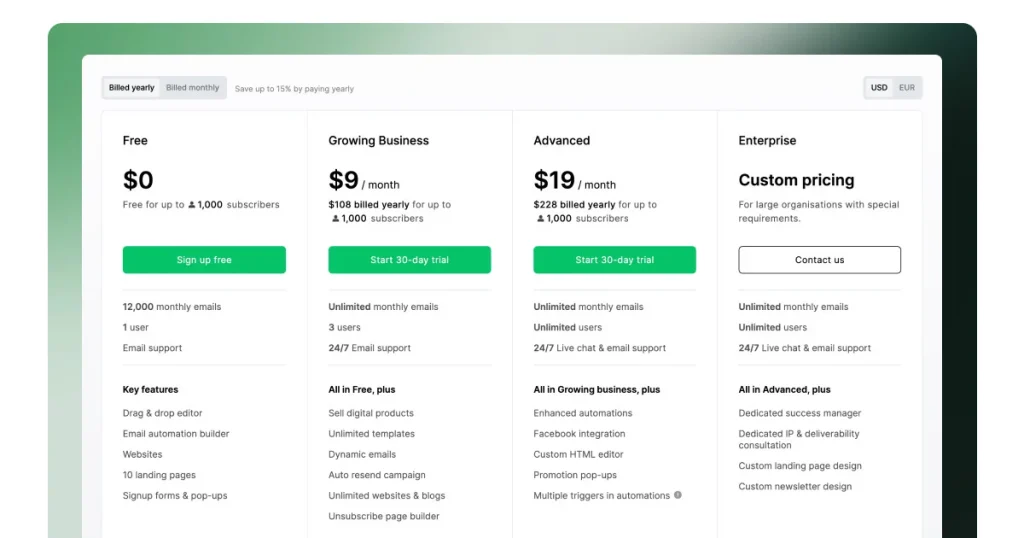
Bottom line: If you’re starting out or running a small list and you want automation, solid deliverability, and room to grow without a shocking bill, MailerLite is the move.
2. Kit (formerly ConvertKit) — Best for Creators Who Want to Monetize
Kit was built specifically for creators — bloggers, course builders, newsletter writers. That focus shows.
The platform gives you tools to sell digital products and run paid newsletters directly inside the tool. You don’t need a separate checkout page. The automation is creator-friendly, the interface is clean, and the segmentation works well for audience-building.
Deliverability is one of Kit’s strongest suits, consistently hitting around 96% inbox placement in testing.
Where it shines: If your business runs on content and you want to charge subscribers or sell digital products, nothing else on this list does that as cleanly out of the box.
Where it falls short: Kit raised its Creator plan from $15/month to $39/month in September 2025 — a 160% price increase. That’s a hard pill if you’re bootstrapping. The email editor is also on the basic side; don’t expect Canva-level design options.
Paid plans start at: $33/month (Newsletter plan, up to 10K subscribers)
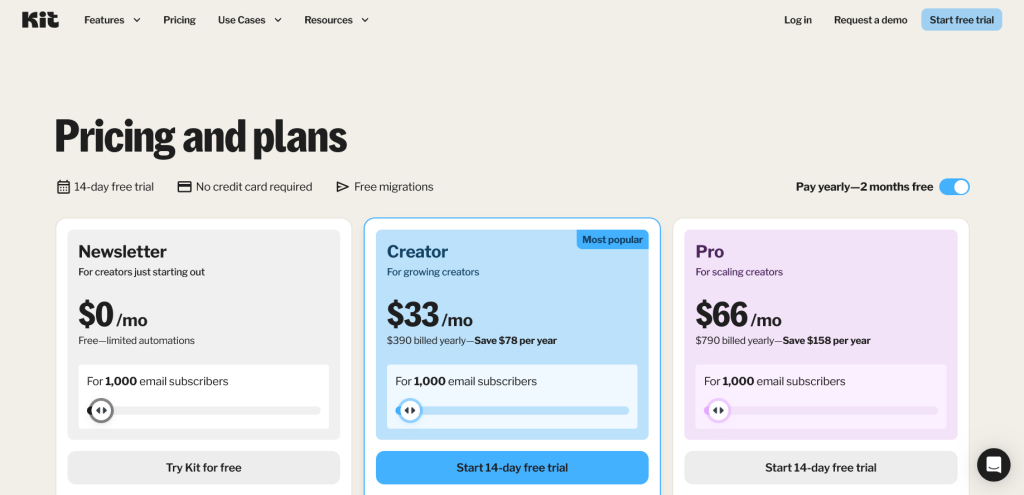
Bottom line: If monetization is your primary goal and your list is engaged, Kit’s tools can pay for themselves. If you’re budget-conscious or just getting started, the pricing is tough to justify.
3. Brevo — Best for Budget-Conscious Solopreneurs with Larger Lists
Brevo’s pricing model is built differently from the others. You pay per email sent, not per subscriber. That makes it dramatically cheaper if you have a big list you email infrequently.
The free plan gives you unlimited contacts with 300 emails per day. You also get a built-in CRM, SMS marketing, and meeting scheduling thrown in. For one person managing multiple channels, that’s a lot of value in one platform.
Where it shines: The cost-to-feature ratio at the entry level is genuinely hard to beat. If you’re building a list but not hammering it every week, Brevo can stay very cheap for a long time.
Where it falls short: The 300-email daily cap on the free plan limits active senders. There’s no built-in payment processing, so you’ll connect an external checkout for selling digital products. The interface can also feel cluttered because there’s so much in it.
Paid plans start at: $9/month
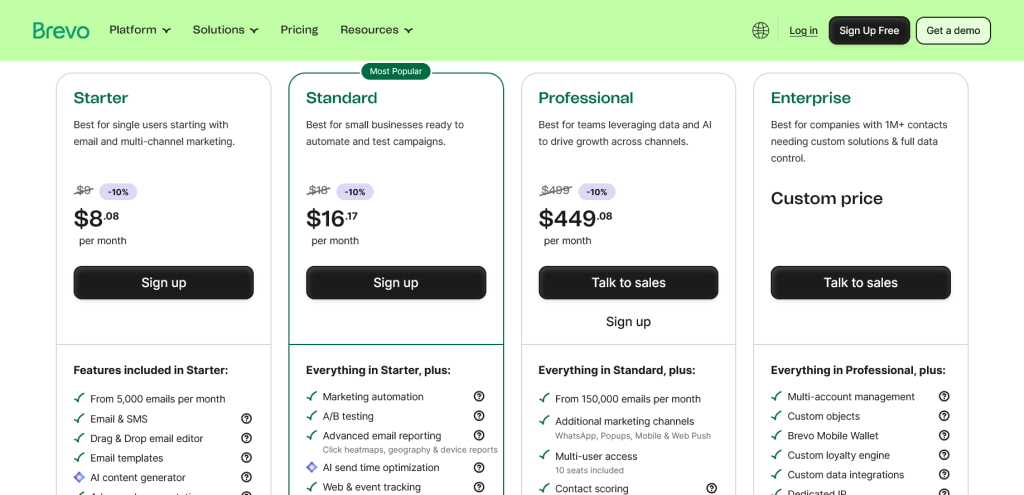
Bottom line: Best fit for solopreneurs with growing lists who don’t send to everyone every week. It’s great for coaches, consultants, service businesses where email is relationship-building, not daily promotion.
4. Moosend — Best for Personalization Without Complexity
Moosend doesn’t get mentioned as often as the others, but it deserves a spot here.
The automation builder is solid, and the platform’s strength is personalization. It controls who gets what based on behavior, tags, and list segments.
For solopreneurs who want to send the right email to the right person without hiring a specialist, Moosend makes that approachable.
It also integrates cleanly with e-commerce platforms if you’re running a product business alongside your services.
Where it shines: Automation depth for the price. At $9/month, you’re getting workflows that would cost you significantly more on other platforms.
Where it falls short: No free plan beyond a 30-day trial. The brand recognition isn’t there compared to Kit or MailerLite, which can matter when you’re evaluating long-term platform stability.
Paid plans start at: $9/month
Bottom line: A smart pick if you care about sending targeted, segmented emails and don’t want to overpay for that capability.
5. beehiiv — Best for Newsletter Monetization Specifically
If you’re building a paid newsletter and that’s your whole model, beehiiv was designed for exactly that.
The platform includes referral programs for subscriber growth, ad network access, and paid subscription tools built in. It’s less a general email marketing tool and more a newsletter publishing platform with a business model baked in.
Where it shines: If you want to build an audience and get paid for it through subscriptions, ads, or affiliate programs, beehiiv’s tools are purpose-built for that workflow.
Where it falls short: No automation in the traditional marketing sense. If you’re selling a service, running a course, or doing anything beyond a newsletter, you’ll outgrow beehiiv’s use case fast. Paid plans jump to $43/month.
Paid plans start at: $43/month
Bottom line: Pick this only if a newsletter is your core product. Otherwise, MailerLite or Kit will serve you better.
How to Actually Choose
Here’s the short version.
Starting from zero, small budget: MailerLite free plan. Get your list set up, build one automation, and start sending. Upgrade when you hit 500 subscribers.
Building a content business, selling digital products: Kit. The monetization tools justify the cost if you’re actively making money from your audience.
Large or growing list, infrequent sends: Brevo. The send-based pricing keeps costs low and the CRM is a genuine bonus.
Want deep segmentation without a big budget: Moosend at $9/month.
Running a paid newsletter as your main business: beehiiv.
Don’t overcomplicate this. Pick the one that fits your current situation, not the one with the most features. You can always switch later. List migrations are easier than they used to be.
Key Takeaways
- Your email list is the only audience you truly own. Build it.
- Most solopreneurs need automation, low startup cost, and pricing that doesn’t explode as the list grows.
- MailerLite is the best all-around choice for most solopreneurs starting out.
- Kit makes sense only if you’re actively monetizing content through digital products or paid newsletters.
- Brevo is the budget pick for larger lists with moderate send frequency.
- Don’t pick a platform based on features you don’t need yet.
- Start simple. One automation, one list, one consistent send schedule. Build from there.
FAQs
What’s the best free email marketing tool for solopreneurs?
MailerLite. The free plan gives you 500 subscribers, 12,000 emails per month, And unlike most competitors, it gives you working automations at $0/month. It’s the most complete free tier for someone building a business alone.
Is Kit (ConvertKit) worth it for solopreneurs in 2026?
It depends on what you’re building. Kit raised its prices significantly in late 2025, so the value case now hinges on whether you’re using the monetization features. If you’re selling digital products or running a paid newsletter, Kit earns its cost. If you’re just building an email list, you can get the same core functionality for less elsewhere.
How much should a solopreneur budget for email marketing?
Realistically, $0 to $20/month gets you very far. MailerLite’s free plan works until you hit 500 subscribers. After that, $10/month covers most solopreneurs up to a few thousand contacts. You don’t need to spend more until your list and revenue justify it.
Can I switch email marketing tools without losing my list?
Yes. Every major platform supports CSV export and import, so your subscriber data transfers cleanly. The bigger time cost is rebuilding automation sequences on the new platform. Plan for a half-day of work if you have more than a handful of workflows set up.